
Standing at the foot of Borobudur Temple just before dawn, you face a quiet decision: climb the ancient stone steps to watch the sunrise from within the monument, or head to a nearby hill to see the entire valley awaken. A Borobudur travel guide that only lists attractions misses this tension between immersion and perspective. The 2025 official travel guide published by the Indonesian Ministry of Foreign Affairs notes that the temple’s sunrise ticket costs IDR 750,000 for foreign visitors, while the hilltop viewpoint at Punthuk Setumbu charges IDR 30,000 on weekdays—two very different ways to greet the same morning.
This guide draws on that official source and the dining page of Plataran Borobudur to map out five verified places: Borobudur Temple, Punthuk Setumbu, Amanjiwo, Kedai Bukit Rhema, and Candirejo Tourism Village. Each offers a distinct layer of culture, food, lodging, or village life, and we distinguish what is confirmed from what you should recheck before you go.
Borobudur travel guide: What the official 2025 guide confirms about Borobudur Temple
The Indonesian Ministry of Foreign Affairs’ Borobudur–Yogyakarta–Prambanan Travel Guide Book 2025 provides the most current official framework for visiting the temple. It confirms two main ticket categories for foreign tourists: a regular daytime entry at IDR 375,000, valid from 6 a.m. to 5 p.m., and a sunrise entry at IDR 750,000, which grants access at 4:30 a.m. via the Manohara Hotel gate. The sunrise ticket includes a flashlight and a light snack. Children under 10 receive reduced rates, though the exact figure should be verified on the official Borobudur Park website.
The guide also states that a timed-entry system and daily visitor cap are in effect as of 2025, making online booking strongly advisable. Conservation work may close certain areas, and the temple remains an active pilgrimage site during Waisak, when processions move from Mendut and Pawon temples. These details anchor the temple visit in current policy, not outdated blog posts.
Understanding the ticket structure is essential because it directly affects your itinerary. The daytime ticket allows you to explore the temple’s nine stacked platforms—six square and three circular—topped by a central dome, with over 2,600 relief panels and 504 Buddha statues. The sunrise ticket, however, lets you experience the monument in the quiet pre-dawn hours, when the mist lifts over the Kedu Plain and the first light illuminates the stupas. This experience is limited to a specific gate and time, so planning ahead is crucial. The official guide does not detail the exact number of daily sunrise slots, but the cap implies that during peak seasons, tickets can sell out. Booking online not only secures your spot but also helps you avoid long queues at the entrance.
For those who prefer a guided experience, the temple offers guides at the entrance, though they are not mandatory. The guide does not specify guide fees, so you should inquire on arrival. The site has basic facilities, including toilets and a small canteen, but bringing your own water is wise, especially during the hotter midday hours. Dress respectfully—shoulders and knees should be covered—and wear comfortable shoes, as you will climb steep, narrow staircases. These practical points, while not explicitly listed in the 2025 guide, are standard for temple visits and align with the cultural norms of Central Java.
Punthuk Setumbu and the sunrise alternative
Punthuk Setumbu sits about 4 kilometers west of Borobudur, a hilltop managed by the local community. The same 2025 guide lists its entrance fee at IDR 30,000 on weekdays and IDR 50,000 on weekends and public holidays. The viewpoint opens at 4:30 a.m., and the walk from the parking area takes 15–20 minutes on a paved uphill path. No reservation is needed; you pay at the ticket booth near the parking lot.
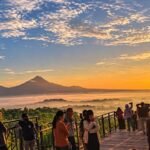
From the platform, you see Borobudur Temple framed by palm trees, with Mount Merapi and Mount Merbabu behind it on clear mornings. Basic warungs sell hot drinks and instant noodles, and simple toilets are available. The guide recommends arriving by 4:30 a.m. to secure a good spot, especially during peak months like June–August and December. After sunrise, you can combine the visit with nearby Bukit Rhema or return to the temple for a daytime tour.
The appeal of Punthuk Setumbu lies in its panoramic perspective. Unlike the temple sunrise, which immerses you in the monument’s architecture, this viewpoint frames the entire landscape. Photographers often prefer it for the classic silhouette shot of Borobudur against the dawn sky. The lower cost also makes it accessible for budget travelers, and the community management means your fee supports local tourism directly. The 2025 guide does not mention specific facilities beyond the basics, so you should not expect extensive amenities. The uphill walk, while paved, requires a moderate level of fitness, and the platform can get crowded, so arriving early is key. The guide’s recommendation to arrive by 4:30 a.m. is based on the fact that the best light usually appears between 5:15 and 5:45 a.m., depending on the season. This timing is not guaranteed, but it provides a reliable window for planning.
Combining Punthuk Setumbu with other nearby sites is a practical strategy. Bukit Rhema, with its famous Chicken Church, is a short drive away, and the temple itself is only 4 kilometers east. This proximity allows you to experience multiple facets of the Borobudur area in a single morning. The guide does not provide details on transportation between these sites, but local ojeks and rented motorbikes are common options. Parking is available for cars and motorbikes at Punthuk Setumbu, and the road is accessible by standard vehicles.
Amanjiwo: dining and stay details from Plataran Borobudur
Plataran Borobudur’s official dining page outlines several venues that shape a luxury stay near the temple. While Amanjiwo is a separate resort, the Plataran page offers comparable context for high-end dining in the area. At Plataran Borobudur, Tiga Dari Borobudur operates from 5 a.m. to 10 p.m. daily and requires a reservation, with a sunrise breakfast available. Enam Langit by Plataran serves international and Indonesian dishes from 6 a.m. to 8 p.m., framing views of six mountains: Merapi, Merbabu, Telomoyo, Andong, Sumbing, and Prau. Reservations are mandatory.
Patio Colonial House opens from 7 a.m. to 10 p.m. with a minimum spending of IDR 500,000 per person, using ingredients from the resort’s organic garden. The Kastil and Langit Borobudur are open by reservation only, the latter offering a “Majestic Sunrise Breakfast” with an undisturbed temple panorama. These details come directly from the Plataran website and reflect the kind of verified, bookable experiences that a traveler can plan around.
For travelers considering a luxury stay, these dining options provide a framework for what to expect in terms of service, cuisine, and setting. The minimum spending at Patio Colonial House, for instance, indicates a fine-dining experience, while the reservation requirements across all venues suggest a need for advance planning. The use of organic ingredients from the resort’s garden highlights a commitment to freshness and local sourcing, which can be a deciding factor for food-focused visitors. The views of six mountains from Enam Langit add a unique geographical context, connecting the dining experience to the natural landscape of Central Java.
While the Plataran page does not detail Amanjiwo’s specific offerings, the resort is known for its architectural homage to Borobudur and its curated cultural experiences. The Plataran venues, however, are open to outside visitors by reservation, making them accessible even if you are not staying at the resort. This distinction is important: you can enjoy a high-end meal with a temple view without booking a room. The page does not list prices for Tiga Dari or Enam Langit, so you should inquire directly for menu costs. The “Majestic Sunrise Breakfast” at Langit Borobudur is a standout, offering an exclusive vantage point for dawn. Because it is by reservation only, you must plan this experience in advance, and availability may be limited.

Kedai Bukit Rhema: a casual stop with a temple view
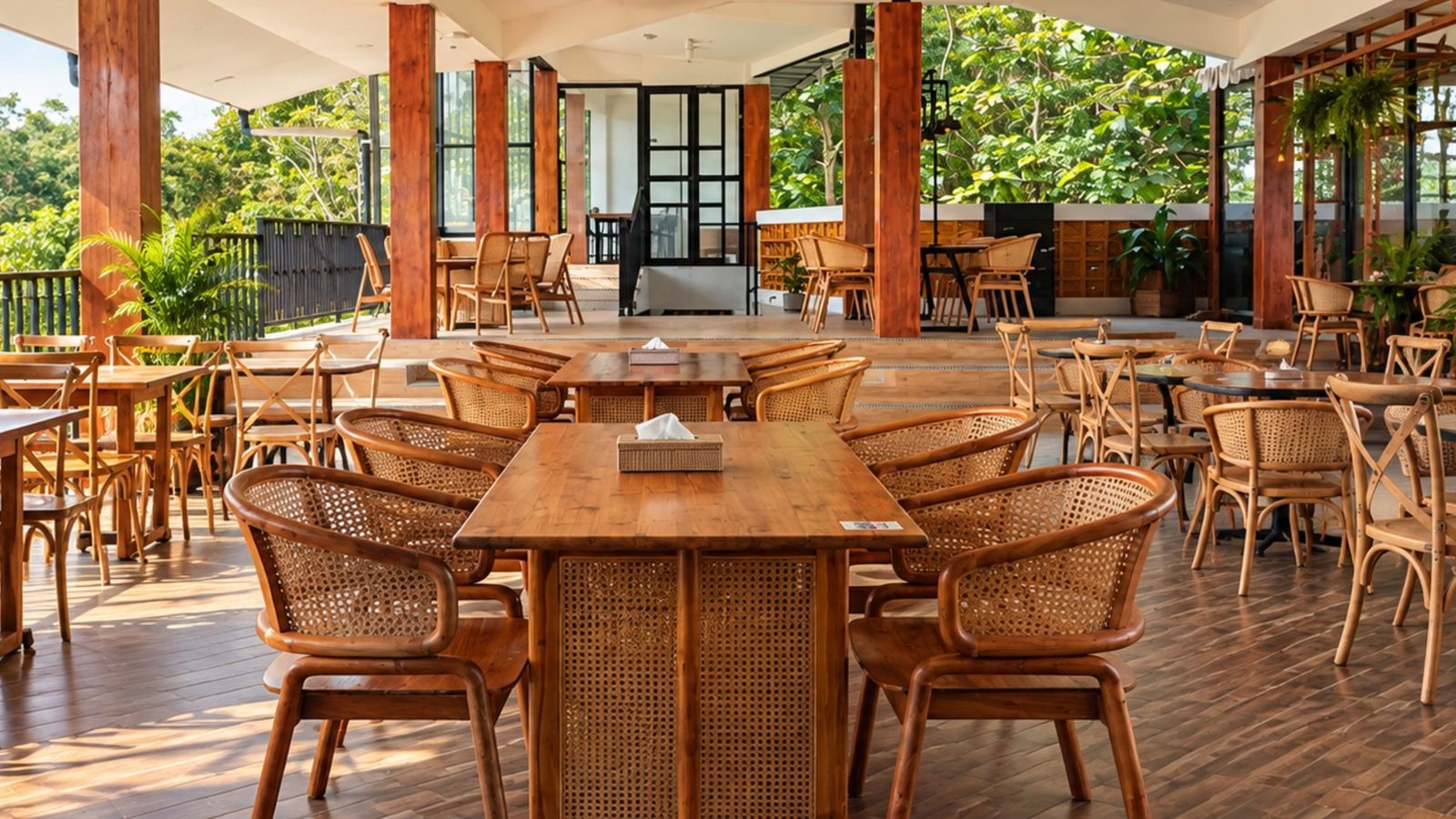
Kedai Bukit Rhema is part of the Bukit Rhema complex, known for the “Chicken Church” (Gereja Ayam). The kedai is an open-air pavilion with wooden tables and benches, facing Borobudur across the valley. The menu is simple—nasi goreng, mie goreng, gado-gado, fresh juices—and the setting is what draws visitors. There is no entrance fee for the kedai itself, but exploring the Chicken Church requires a separate ticket of IDR 25,000.
Based on the Google Maps listing and recent visitor reports, the kedai is open daily from 7 a.m. to 6 p.m. Main dishes cost between IDR 25,000 and 45,000, and coffee or tea is around IDR 15,000. Cash is preferred. The road up is steep and narrow; parking is limited, so many visitors use a motorbike or local ojek. Late afternoon offers the best light, with the sun setting behind the temple.
Kedai Bukit Rhema fills a niche for travelers who want a view without the formality or cost of resort dining. Its affordability makes it a practical choice for backpackers and families, and the casual atmosphere encourages lingering. The kedai’s operating hours, from 7 a.m. to 6 p.m., mean it can serve as a breakfast stop after a sunrise at Punthuk Setumbu or a lunch spot before exploring the Chicken Church. The separate ticket for the Chicken Church is a key detail: if you only want to eat, you pay nothing extra, but the quirky architecture of the church is a popular photo opportunity that many visitors combine with their meal.
The road conditions and limited parking are important logistical considerations. The steep, narrow road may be challenging for larger vehicles, and the lack of ample parking means arriving early or using alternative transport is advisable. The preference for cash also reflects the local, informal nature of the establishment, so you should carry sufficient rupiah. The late afternoon light is a natural draw, but the kedai’s open-air design offers little shade during midday, so a hat and sunscreen are practical. The Google Maps listing and visitor reports are not official sources, but they provide consistent, recent information that aligns with the kedai’s known operations.
Candirejo Tourism Village: community-based cultural immersion
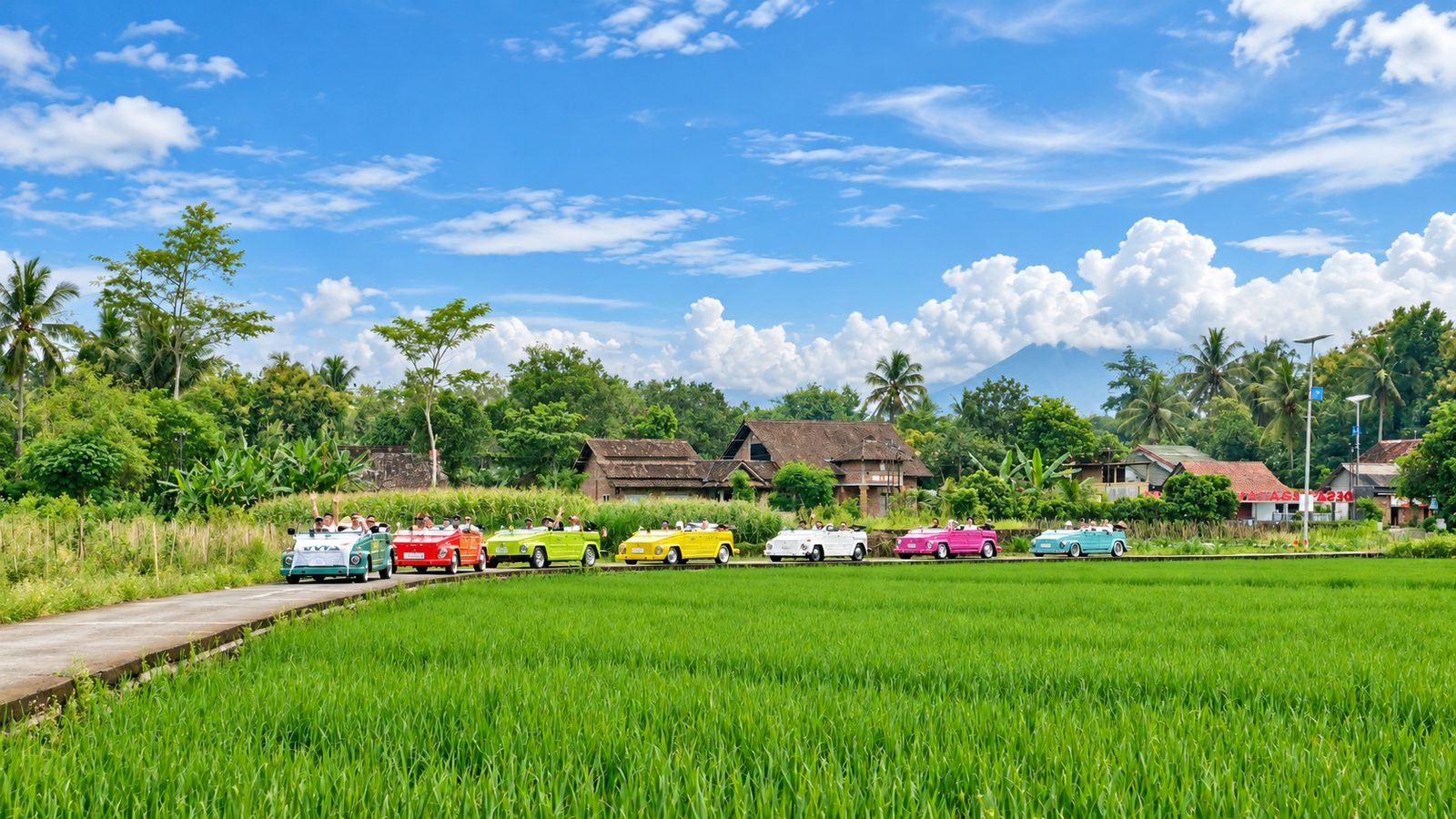
Candirejo is a living village about 3 kilometers east of Borobudur, where around 1,200 families run community-based tourism. Instead of observing, you participate: ride a dokar through the lanes, learn gamelan, make jamu, or join a cooking class in a villager’s home. The 2025 travel guide notes that a half-day package including a dokar ride, gamelan workshop, and lunch costs around IDR 150,000 per person. Full-day packages with farming or trekking range from IDR 250,000 to 300,000.
Homestays start at about IDR 200,000 per night, including breakfast and dinner. You sleep in a Javanese house with a mattress on the floor and a shared bathroom. Contact the village tourism office at least a day ahead, especially for an English-speaking guide. The village is accessible by car or motorbike, and parking is available near the main hall. Bring cash, as there are no ATMs.
Candirejo represents a shift from monument-focused tourism to people-focused travel. The village’s community-based model means that your spending directly supports local families, schools, and health clinics. The activities are not staged performances but genuine aspects of daily life, offering a deeper understanding of rural Javanese culture. The 2025 guide’s package prices provide a clear budget framework, but the range (IDR 150,000 to 300,000) depends on the activities chosen. The homestay experience, while basic, is an opportunity to engage with a host family, share meals, and learn about local customs. The lack of ATMs underscores the need for cash, and the recommendation to book a day ahead ensures that the village can arrange an English-speaking guide if needed.
The village’s location, just 3 kilometers from Borobudur, makes it a convenient base for exploring the temple and surrounding hills. You can easily spend two or three days here, combining village life with trips to the temple and viewpoints. The 2025 guide does not specify the exact number of homestays or their capacity, so availability may vary, especially during peak seasons. Contacting the tourism office directly is the best way to confirm details and tailor your visit.
How these places fit different travel styles
A first-time visitor might pair the Borobudur Temple sunrise with Punthuk Setumbu the next morning, then eat at Kedai Bukit Rhema. A luxury traveler could book Amanjiwo or a Plataran dining experience, while a culturally curious guest might spend two or three days in Candirejo. Budgets vary widely: a backpacker can cover temple entry, a viewpoint, local meals, and a homestay for under IDR 1,000,000 per day, while a high-end itinerary can exceed IDR 15,000,000 per day.
The dry season (April–October) offers the most reliable sunrise views but draws larger crowds. The wet season (November–March) brings lush landscapes and fewer visitors, though rain can obscure the temple. Check the weather forecast and remain flexible. For more on local food, see our article on tempat makan terdekat dari Candi Borobudur. If you want to explore Magelang’s culinary scene further, read about kuliner Magelang: 3 hidangan wajib coba.
The decision between these options hinges on what you value most: historical immersion, panoramic views, luxury comfort, casual local flavor, or cultural connection. The official 2025 guide and Plataran dining page provide the factual backbone, but your personal travel style determines the mix. A traveler focused on photography might prioritize Punthuk Setumbu and the temple sunrise, while a family with children might find Candirejo’s hands-on activities more engaging. The cost differences are stark: the temple sunrise ticket alone is more than twice the price of a full-day village package, yet each offers a distinct, memorable experience. Understanding these trade-offs helps you allocate your time and money effectively.
Seasonal considerations also play a role. The dry season’s reliable weather is ideal for sunrise chasers, but the crowds can diminish the serenity of the temple and viewpoints. The wet season’s rain might obscure views, but the landscape is greener, and the sites are quieter. The 2025 guide does not provide month-by-month weather data, so you should consult a reliable weather service closer to your travel dates. Flexibility in your itinerary allows you to swap days if the weather turns unfavorable.

What still needs confirmation before you travel
Operating hours, pricing, and access policies can shift, especially around public holidays and the annual Waisak celebration. The official Borobudur Park website, Amanjiwo reservations page, and Candirejo village social media channels are the most reliable places to check. For dining at Plataran Borobudur, reservations are mandatory and can be made through their website. Always verify before you go.
The 2025 guide is a snapshot of information valid at the time of publication. Since then, policies such as the timed-entry system or visitor caps may have been adjusted. The temple’s conservation status means that certain areas might be closed without notice, and the Waisak celebration can affect access and crowd levels. For Punthuk Setumbu, the community management could change fees or opening hours, so checking recent visitor reports or local contacts is wise. Kedai Bukit Rhema’s reliance on cash and its steep road are unlikely to change, but its operating hours could vary. Candirejo’s packages and homestay rates are subject to change based on demand and inflation, so confirming with the tourism office is essential. The Plataran dining venues, being part of a professional resort, are more likely to maintain consistent operations, but reservations remain mandatory, and menu prices are not listed online.
Frequently asked questions
What is the most important part of a Borobudur travel guide?
The most critical element is knowing the difference between the temple sunrise ticket and the hilltop viewpoints. The official 2025 guide confirms that the sunrise ticket costs IDR 750,000 and grants access at 4:30 a.m., while Punthuk Setumbu charges IDR 30,000–50,000 and offers a panoramic view. Your choice shapes the entire experience.
Where can I find official updates about Borobudur travel guide details?
Check the Borobudur Park official website for ticket prices and timed-entry policies, the Plataran Borobudur site for dining reservations, and the Candirejo Tourism Village social media for activity packages. These sources are maintained by the managing bodies and reflect the latest changes.
How do I decide between Borobudur Temple sunrise and Punthuk Setumbu?
If you want to be inside the monument as the light hits the stupas, choose the temple sunrise. If you prefer a wider landscape shot with the temple in the distance and a lower cost, head to Punthuk Setumbu. Many travelers do both on consecutive days.