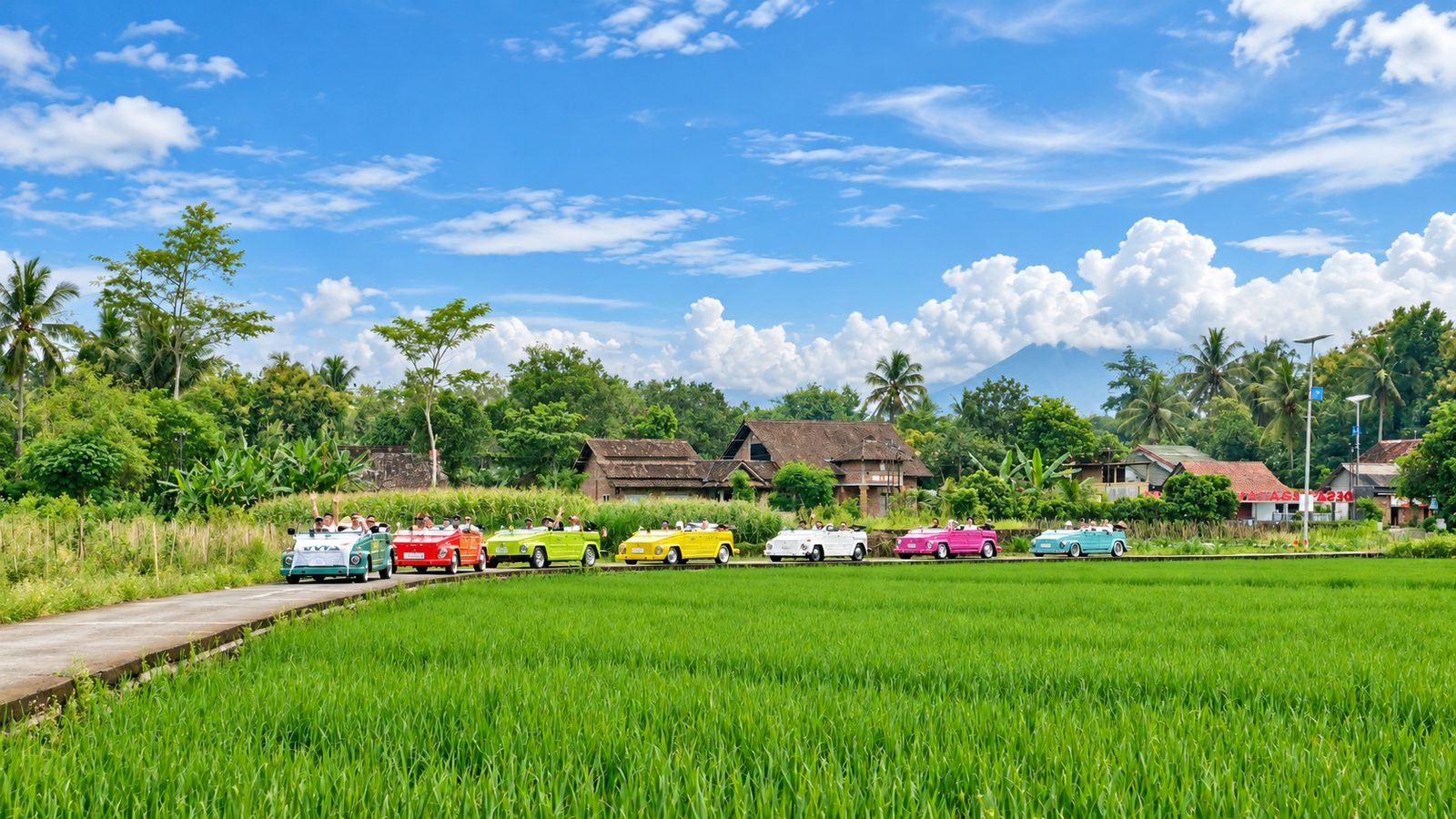

Today we want to tell you about a part of the Borobudur area that many travelers only see through a car window: the villages. Most visitors arrive for the temple, climb, take their photos, and head back to Yogyakarta the same afternoon. Yet just around the temple, everyday Javanese life carries on in rice fields, home kitchens, and village halls. If you want to spend a few hours inside that life rather than passing by it, Candirejo village is one of the most organized places to start.
We have already written about five tourism villages near Borobudur for travelers who want to compare options. This article goes deeper into just one of them. Below, we look at where Candirejo is, what a typical day there looks like, how long it takes, which languages the guides speak, and how to book directly with the village.
Where Candirejo village is
Desa Wisata Candirejo, as it is called in Indonesian, sits in the Borobudur district of Magelang Regency, Central Java. The official address listed by the village is Jl. Raya Candirejo, Sangen, Candirejo, Kec. Borobudur, Magelang, Jawa Tengah 56553. It is a short drive from Borobudur Temple, which makes it easy to pair with a temple visit on the same day.
The village sits at the foot of the Menoreh Hills, and that setting shapes much of what you will see: farmland, hillside views, and rivers that meet not far from the village. Tourism in Candirejo is managed by the community through the village tourism cooperative, Koperasi Desa Wisata Candirejo, so the guides, homestays, and meals you encounter are run by local residents.
What the Village Experience includes
The most complete day package on the official Candirejo website is called the Village Experience. It is listed at around six hours and combines several activities into one route:
- Soft trekking to Watu Kendil. A short walk up to a viewpoint where you can look down over Candirejo village from the hill.
- Jeep to the pendopo. From there, a jeep takes you to a pendopo (an open Javanese pavilion) for traditional snacks, followed by lunch at a local house.
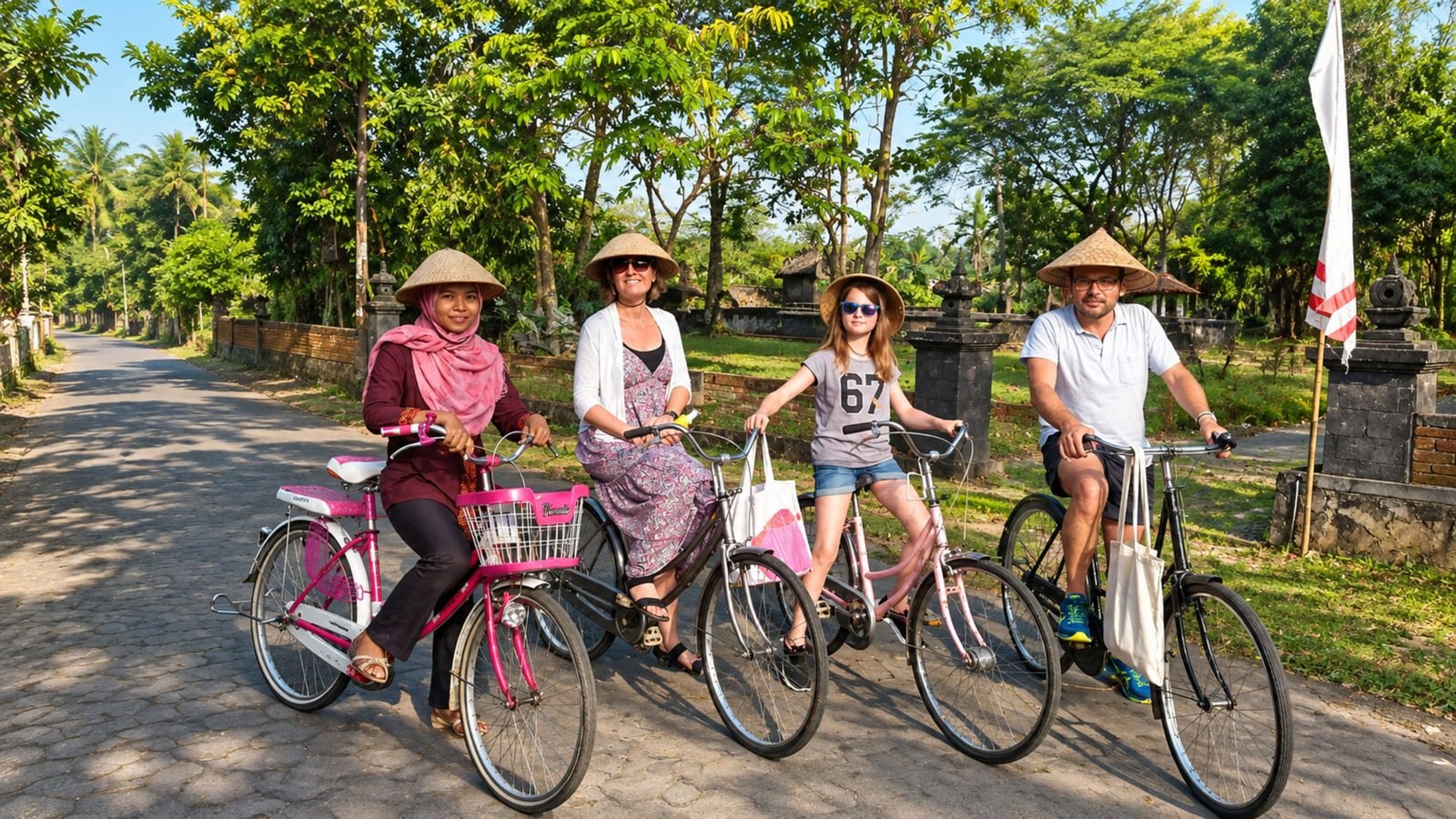
- Dokar or bicycle village tour. You switch to a dokar, the local horse-drawn cart, or a bicycle, and ride through the village to visit a home industry.
- Agro-tourism. A look at the tumpangsari farming system, where several crops are planted together on the same land.
- Gamelan lesson. A simple introduction to playing the gamelan, the traditional Javanese percussion ensemble.
- Tempuran. A visit to the point where three rivers meet, rivers that also serve as cold lava paths from Mount Merapi.
The official description also mentions seeing residents at work in the fields, preparing the ground for planting, and picking seasonal fruit when it is available. Treat that last part as a bonus rather than a promise, since what you see depends on the season.
Shorter options and overnight stays
Six hours is a full day, and not every itinerary has room for it. The village website also lists shorter and longer formats:
- Dokar Village Tour. Around two hours by dokar, with a home industry visit, the tumpangsari fields, a simple gamelan session, Tempuran, and traditional snacks with brown sugar tea at the pendopo.
- Cooking lesson. Listed in four-hour and six-hour versions on the official site.
- Homestay package. The “Serenade at the Foot of Menoreh Hill” package is one day and one night, staying in a local house, with dinner, a gamelan session, and an early trip to Watu Kendil to watch the sunrise over the village before the dokar or bicycle tour.
Traditional dance is also among the activities offered in Candirejo. If you are planning a short getaway from Yogyakarta and want something calmer than a hotel weekend, the homestay option is worth asking about.
Do the guides speak English?
Yes. According to the official package pages, local guides lead tours in English, Indonesian, and French. This matters more than it might seem. Much of the value of a village visit comes from the small explanations along the way: why crops are planted in a certain pattern, what a snack is made from, or what a piece of gamelan is called. A guide who can explain those details in your language turns a pleasant ride into a real exchange.
How to book and what to ask
The village takes bookings directly. Contacts listed on the official website are:
- WhatsApp / phone: +62 813-2880-8520
- Ersyid: 0857-9988-6714
- Rifa: 0821-2129-1941
- Office (phone/fax): 0293-789675
- Email: [email protected]
The website lists online hours of 08.00 to 21.00 on most days, with longer hours on Sunday, so messages sent in the evening may be answered the next morning.
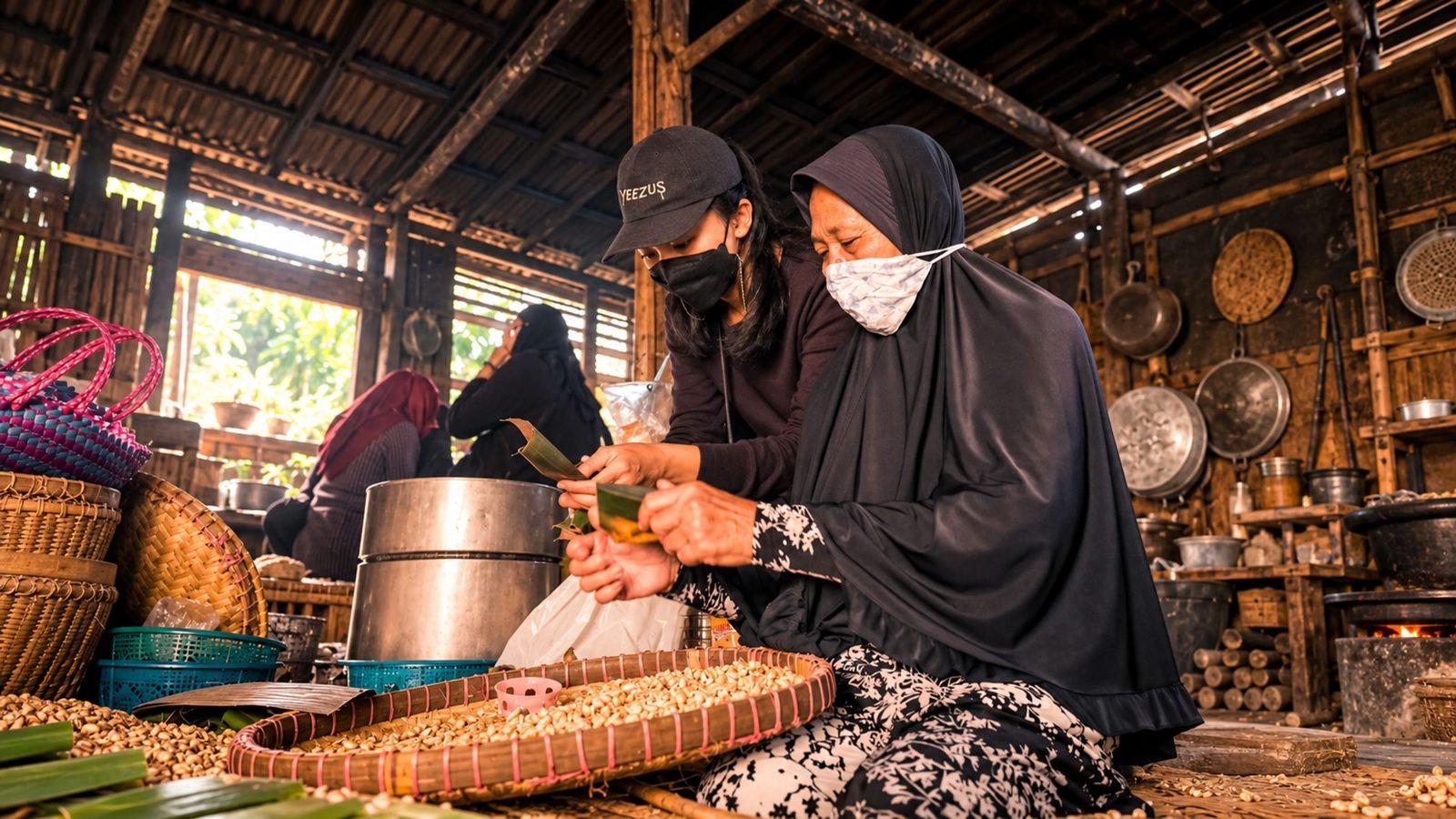
Prices are best confirmed directly with the village. Rates depend on the package, group size, and whether meals or a homestay are included, and older figures you may find online are unlikely to match what the village charges today. When you message, include your preferred date, the number of people, the package you are interested in, your guide language, and any dietary needs. Ask for a current quote and what it includes, such as jeep, dokar, meals, and guide.
Combining Candirejo with Borobudur Temple
Because Candirejo is so close to the temple, the two fit naturally into one day. A common approach is to visit Borobudur Temple early, when the air is cooler, and then head to the village for the Village Experience or the shorter dokar tour. If you choose the homestay package, you can flip the order: arrive in the afternoon, stay the night, watch the sunrise from Watu Kendil, and visit the temple after the village tour.
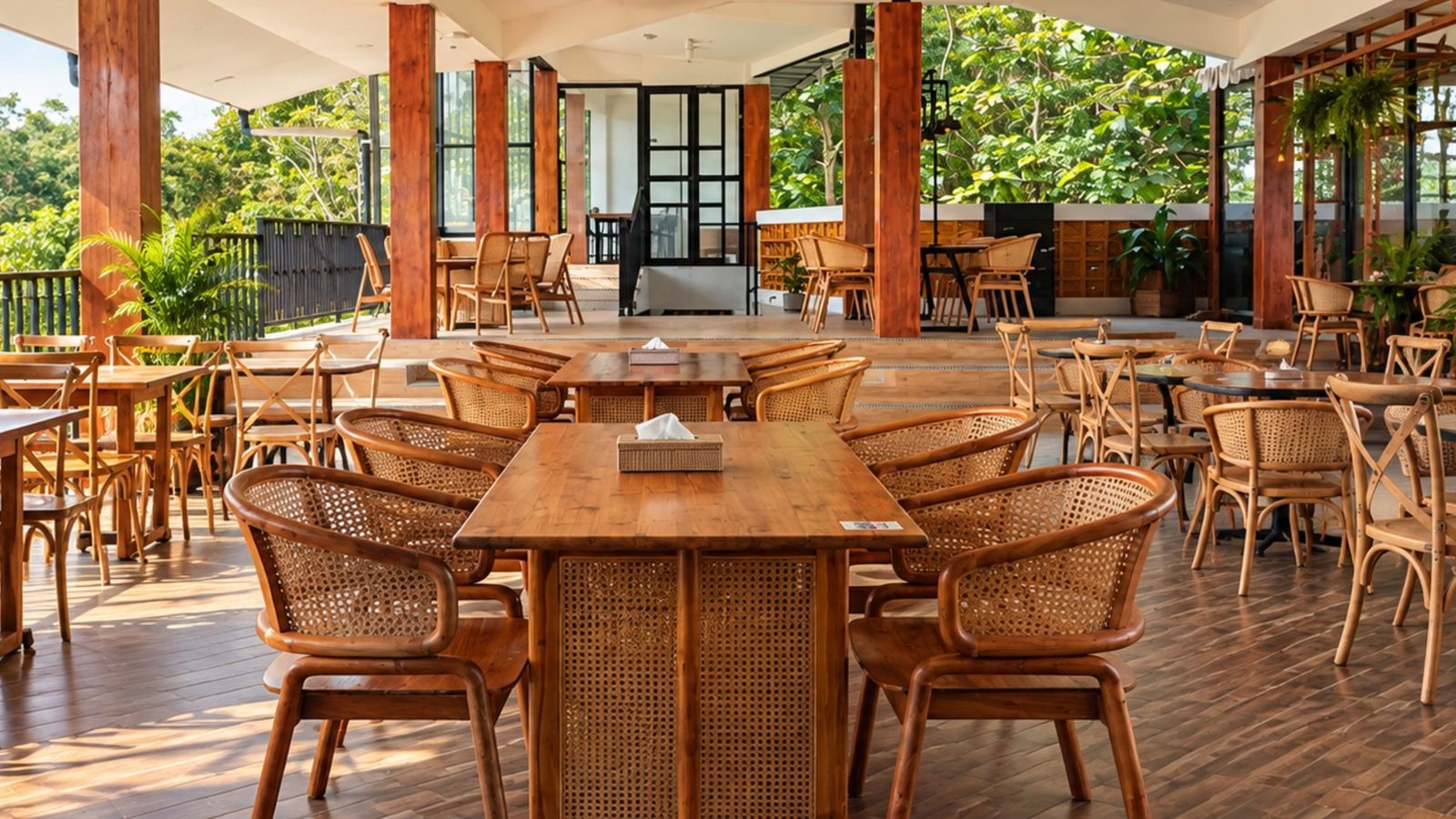
If you need a meal or a coffee after your tour, Kedai Bukit Rhema, the café in the Rumah Doa Bukit Rhema area, is an easy stop for lunch or coffee with a view over the Menoreh Hills.
A few practical tips for village visits
- Wear comfortable shoes. The trek to Watu Kendil is described as soft trekking, but paths can be uneven and slippery after rain.
- Bring sun protection and water. Much of the day is spent outdoors, in fields and on village roads.
- Ask before photographing people. Residents are generous with their time, and a quick smile and a question go a long way.
- Stay on the paths in the fields. Farmland is someone’s livelihood, so follow your guide’s lead.
- Carry some cash. Small purchases from home industries are a nice way to support the families you meet.
Let the village show you its own rhythm
Travelers, a day in Candirejo village is not about ticking off sights. It is about watching how a community lives with its land, its rivers, and its traditions, and being welcomed into that for a few hours. Book directly, ask your questions in advance, and leave room in your schedule so the day does not feel rushed. You may find that the village is the part of your Borobudur trip you talk about the most.