
Deciding which temples near Borobudur to visit often comes down to a single trade-off: accessibility versus atmosphere. The 2025 Borobudur–Yogyakarta–Prambanan travel guide published by the Indonesian Ministry of Foreign Affairs lists Mendut, Pawon, and Ngawen among the key historical sites in the area, yet most visitors only see the first two because they sit directly on the main road. If you are willing to venture a little farther, Selogriyo and Gunung Wukir reward you with terraced landscapes and stone remnants that feel worlds away from the crowds.
This guide compares five verified temples near Borobudur using concrete details from official sources, so you can decide which ones fit your itinerary—whether you have a spare hour after sunrise at Borobudur or a full day to explore the countryside.
What the 2025 Official Travel Guide Says About Temples Near Borobudur
The Indonesian Ministry of Foreign Affairs’ 2025 travel guide positions Mendut, Pawon, and Ngawen as integral parts of the Borobudur cultural landscape. Mendut Temple is highlighted for its three large stone Buddha statues, while Pawon is noted for its role in the annual Vesak procession. Ngawen Temple, located further north in Muntilan, is described as a Buddhist complex with five aligned temples, though only one has been fully restored. The guide does not provide current opening hours or ticket prices, so visitors should check official channels before traveling.
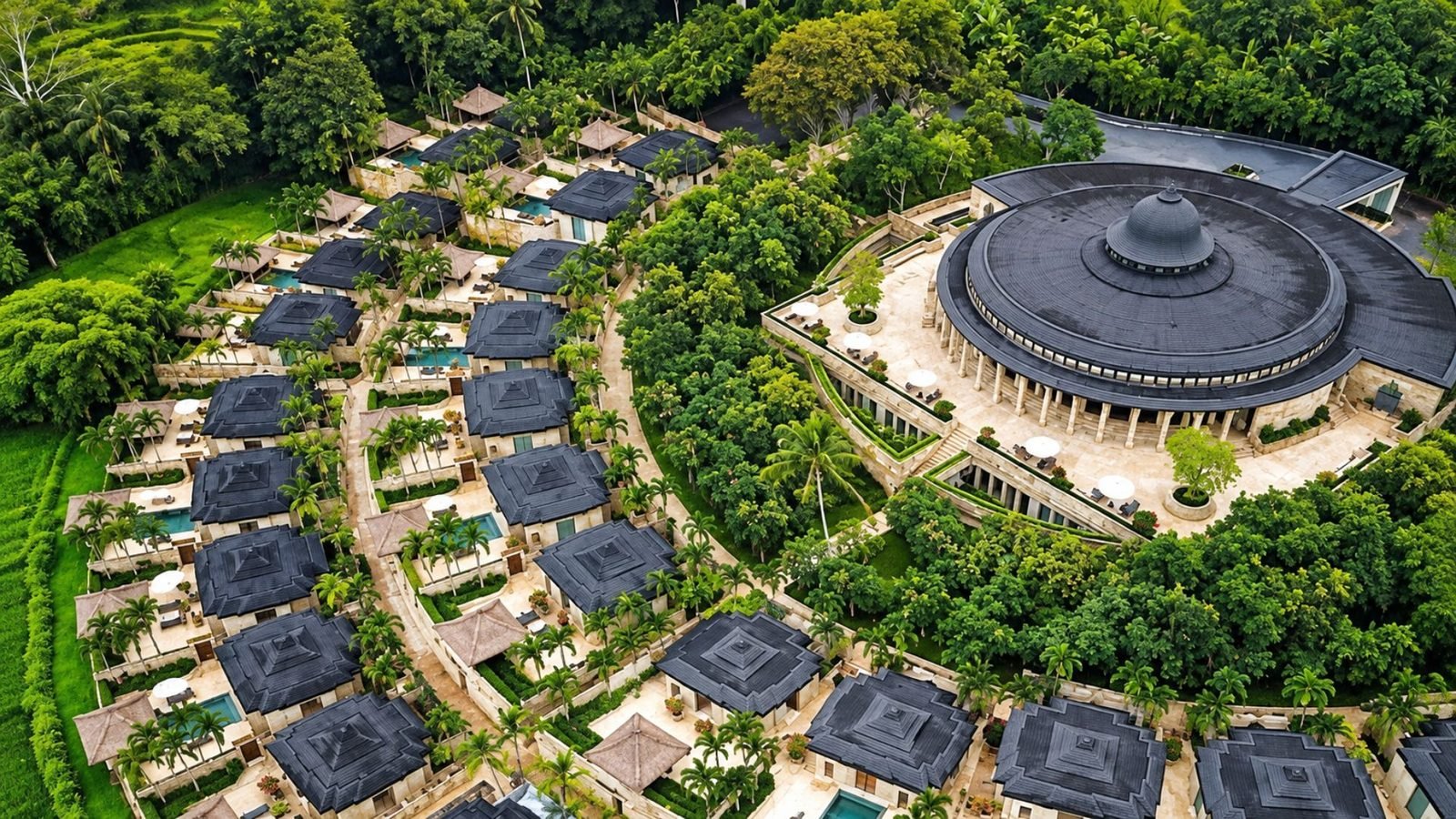
Plataran Borobudur’s dining page, while not a temple source, confirms that the area’s tourism infrastructure continues to grow, with venues like Enam Langit offering views of six mountains and the temple. This suggests that the region is well-equipped for travelers combining temple visits with comfortable breaks.
Mendut Temple: The Closest and Most Accessible
Mendut Temple sits roughly three kilometers east of Borobudur and is the easiest to reach by car or bicycle. The 2025 government guide confirms its main chamber houses three large stone statues: a seated Buddha flanked by two bodhisattvas. The carvings on the outer walls depict stories from Buddhist scriptures, though the guide does not specify which texts. Because Mendut is part of the Vesak procession route, it can get busy during the annual celebration, but on ordinary days it tends to be quieter than Borobudur itself.
Visitors often combine Mendut with Pawon Temple, which lies on the same road. No official source lists current admission fees, so it is wise to carry small cash and confirm the price at the entrance. The temple grounds are compact, and a visit rarely takes more than 30 minutes unless you linger over the reliefs.
Pawon Temple: A Small Gem on the Vesak Route
Pawon Temple is even smaller than Mendut, located about two kilometers from Borobudur. The 2025 travel guide mentions it primarily in the context of the Vesak procession, where monks walk from Mendut to Pawon before continuing to Borobudur. Architecturally, Pawon is a single-chambered structure with a square base and a stupa on top. The guide does not detail the interior, but other sources note it once held a statue of the Buddhist deity Kuwera, now kept elsewhere.
Because of its size, Pawon can be explored in 15–20 minutes. It sits right beside the main road, so there is no long walk or climb. If you are short on time, pairing Mendut and Pawon makes for an efficient morning before or after Borobudur.
Ngawen Temple: Five Aligned Temples North of Borobudur
Ngawen Temple lies in Muntilan, about 15 kilometers north of Borobudur. The 2025 government guide describes it as a Buddhist complex consisting of five temples arranged in a row, though only the central one has been fully reconstructed. The other four remain in various states of ruin, giving the site a raw, archaeological feel. The guide does not specify the exact date of construction, but the style suggests a 9th-century origin.
Reaching Ngawen requires a short drive through local villages, and the roads are generally in good condition. There is no mention of public transport in the source, so hiring a car or motorbike is the most practical option. The site is less visited than Mendut or Pawon, so you may have the temples to yourself. As with all sites, confirm opening hours locally before setting out.
Selogriyo Temple: A Hillside Temple with Rice Terrace Views
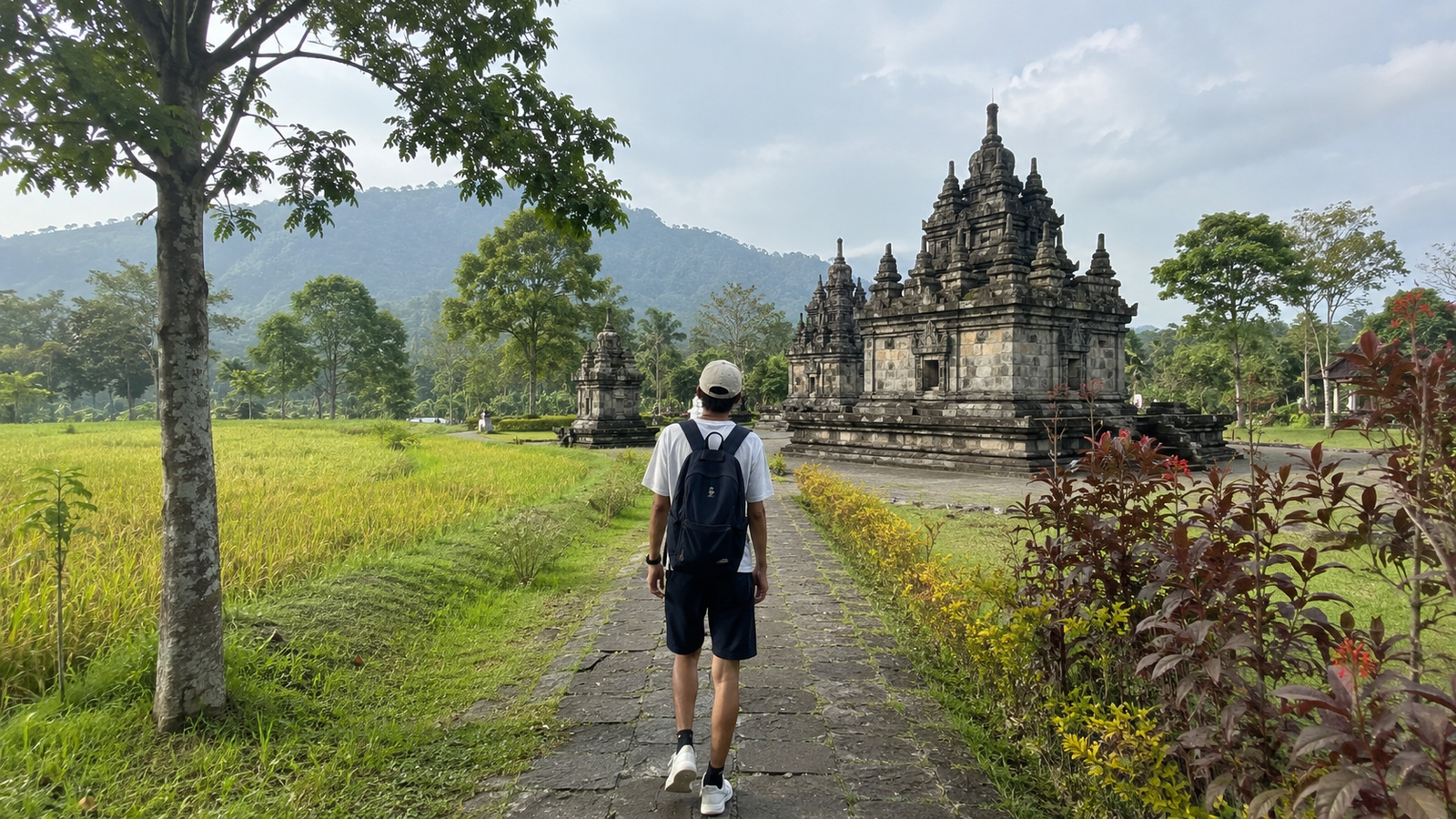
Selogriyo Temple is the most remote of the five, perched on a hillside in the Menoreh range northwest of Borobudur. The 2025 travel guide does not provide a detailed description, but it is listed among the region’s historical sites. The temple itself is a small stone structure dedicated to Shiva, surrounded by terraced rice fields. The walk from the parking area takes about 20–30 minutes along a dirt path, so wear comfortable shoes.
Because Selogriyo is not on the main tourist circuit, facilities are minimal. Bring water and snacks, and plan to visit in the morning when the light is best for photography. The guide does not mention entrance fees or opening hours, so check with a local guide or your accommodation before heading out.
Gunung Wukir Temple: A Stone Platform with an Inscription
Gunung Wukir Temple, also known as Canggal Temple, is located on a hill near Muntilan. The 2025 government guide notes it is the site of the Canggal Inscription, dated 732 CE, which is one of the oldest written records in Central Java. The temple itself is not a towering structure; rather, it is a stone platform with scattered remnants. The inscription is now kept elsewhere, but the location remains historically significant.
Access involves a short uphill walk, and the site is often empty. There are no facilities, so plan accordingly. The guide does not provide current conditions, so it is best to visit during the dry season when the path is not slippery.
Why These Temples Matter for Your Borobudur Trip
Visiting temples near Borobudur adds depth to your understanding of the region’s history. Mendut and Pawon show how Buddhism flourished alongside the construction of Borobudur, while Ngawen, Selogriyo, and Gunung Wukir reveal the spread of Hindu and Buddhist influences across the Kedu Plain. The 2025 travel guide emphasizes that these sites are part of a larger cultural landscape, not isolated monuments.
From a practical standpoint, these temples also offer a break from the crowds. While Borobudur can feel overwhelming, especially during peak hours, the smaller temples provide quiet moments to appreciate the stonework and the surrounding countryside. They are also easier to fit into a flexible itinerary, as most can be visited in under an hour each.
What Still Needs Confirmation Before You Go
The 2025 government guide does not include current opening hours, ticket prices, or detailed access instructions for any of these temples. Information about facilities, parking, and guided tours is also absent. Therefore, before visiting, check the official Borobudur Tourism Park website or contact your hotel for the latest updates. Conditions can change, especially during the rainy season when some paths may become difficult.
Additionally, while the guide lists Selogriyo and Gunung Wukir as historical sites, it does not describe their current state of preservation. Local reports suggest Selogriyo has undergone restoration, but without official confirmation, it is best to manage expectations. Always verify with a trusted local source before making the trip.
Quick Answers to Common Questions
Which temple near Borobudur is easiest to visit? Mendut Temple is the most accessible, located just three kilometers from Borobudur on a main road. It can be combined with Pawon Temple in a single short trip.
Are these temples free to enter? The 2025 government guide does not list admission fees. Some sites may charge a small retribution fee, so carry cash in small denominations.
Can I visit all five temples in one day? It is possible but tight. Mendut and Pawon are quick stops; Ngawen, Selogriyo, and Gunung Wukir require more travel time. Start early and consider hiring a driver for the day.
Where can I find official updates? Check the Borobudur Tourism Park website or ask at your accommodation. Local guides in Magelang often have the most current information.
For a different kind of break after temple-hopping, the area around Borobudur also offers a growing dining scene. If you are looking for a meal with a view, restaurants near Borobudur range from simple warungs to upscale resort dining. Plataran Borobudur’s Enam Langit, for instance, serves Indonesian and international dishes with a panorama of six mountains—a fitting way to end a day of exploration.
If you prefer a more adventurous way to reach these temples, consider a vintage VW safari. The VW Safari Magelang takes you through back roads and villages, offering a unique perspective on the countryside between sites.