
Lontong Cap Go Meh: A Warm Culinary Story of Unity and Tradition
If you find yourself in Indonesia during the tail end of the Lunar New Year celebrations, there is one aroma that defines the atmosphere: the rich, coconut-infused scent of Lontong Cap Go Meh. It is a dish that carries the weight of history, the warmth of family gatherings, and the beautiful complexity of cultural fusion. While many associate the Lunar New Year strictly with Chinese traditions, Lontong Cap Go Meh is a uniquely Indonesian phenomenon, born from the blending of Chinese immigrants and local Javanese culture centuries ago.
In this deep dive, we aren’t just looking at a recipe. We are exploring a cultural landmark that has survived generations, evolving from a simple adaptation into a festive staple that millions of people look forward to every year. So, grab a seat, and let’s uncover the story behind this bowl of golden goodness.
The History: A Beautiful Marriage of Cultures
The story of Lontong Cap Go Meh begins with the Peranakan culture. Centuries ago, Chinese immigrants (mostly men) arrived in the Indonesian archipelago. They didn’t just bring their belongings; they brought their culinary habits. However, since they often married local Javanese women, their kitchens became a laboratory for fusion.
Traditionally, in China, the 15th day of the Lunar New Year (Cap Go Meh) is celebrated with yuanxiao (sweet glutinous rice balls). But in Java, the early Chinese settlers found that local tastes leaned toward savory, spicy, and coconut-based dishes. Legend has it that the Sultan of Mataram once held a competition, and the Chinese community adapted their traditional offerings to include local ingredients to show respect and assimilation. Over time, the round rice cakes (lontong) replaced the yuanxiao, and the spicy curries replaced the lighter soups.
The Symbolism in Every Bite
Nothing in Lontong Cap Go Meh is accidental. Every component serves as a prayer for the coming year:
- Lontong (Rice Cakes): Their elongated shape and the way they are densely packed represent longevity and a full, prosperous life. Because they are round when sliced, they also symbolize perfection and wholeness.
- Opor Ayam (Chicken Curry): The golden yellow color of the curry represents wealth and gold. It’s a wish for financial success in the new year.
- Sayur Lodeh/Rebung (Bamboo Shoots): Bamboo shoots grow quickly and strongly, symbolizing progress, growth, and rising to new heights.
- Eggs: Usually served as Telur Pindang, eggs represent rebirth and new beginnings.
Breaking Down the Components of a Masterpiece
To the uninitiated, Lontong Cap Go Meh might look like a chaotic plate of food. However, it is a finely tuned orchestra of textures and flavors. Each element must be prepared individually to ensure the final assembly is perfect.
1. The Lontong (The Foundation)
Unlike the rice cakes found in other parts of Asia, Indonesian lontong is wrapped in banana leaves and boiled for several hours. This process gives the rice a subtle floral aroma and a slight greenish tint on the outside. The texture must be firm yet supple—never mushy.
2. Opor Ayam (The Soul)
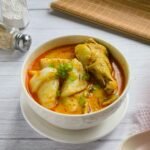
This is a mild, rich chicken curry cooked in coconut milk with a blend of galangal, lemongrass, coriander, and turmeric. It provides the creamy base that ties all the other spicy elements together. In many households, the chicken is slow-cooked until it literally falls off the bone.
3. Sayur Lodeh or Sambal Goreng Labu Siam
Depending on the region, you will find either a white coconut vegetable soup (lodeh) or a spicy chayote squash stir-fry (sambal goreng). The crunch of the vegetables is essential to balance the softness of the rice and chicken.
4. Sambal Goreng Ati
For those who love a bit of heat, this dish of fried beef liver and potatoes in a spicy chili paste is the “kick” the plate needs. It adds depth and an earthy richness that is unmistakably Javanese.
5. The Finishing Touches: Koya and Bubuk Kedelai
Perhaps the most unique part of Lontong Cap Go Meh is the powders sprinkled on top. Bubuk Kedelai (sweet and savory soybean powder) and Koya (crushed prawn crackers and garlic) add an umami punch and a unique texture that you won’t find in any other dish.
Why It Remains a Festive Favorite: Industry Statistics
The culinary landscape in Indonesia is shifting, but traditional dishes like Lontong Cap Go Meh are seeing a massive resurgence. According to culinary tourism data, there has been a 25% increase in “heritage food” searches during festive seasons over the last three years.
Furthermore, the Peranakan food industry is estimated to be worth millions as restaurants in hubs like Jakarta, Semarang, and Surabaya specialize in preserving these ancient recipes. For many, Lontong Cap Go Meh is a “seasonal limited-time offer” that drives massive foot traffic to local eateries, with some restaurants reporting that they sell over 1,000 portions in a single day during the Cap Go Meh festival.
How to Host Your Own Cap Go Meh Feast
You don’t have to be in a five-star hotel to enjoy this meal. If you want to bring the warmth of this tradition into your home, here are a few actionable strategies:
Preparation is Key
Because there are so many components, do not try to cook everything on the day of the feast. Most of the stews, like the Opor Ayam and Sambal Goreng Ati, actually taste better the next day after the spices have had time to meld. Cook these 24 hours in advance.
The Art of Plating
Lontong Cap Go Meh is a visual feast. When serving your guests, follow this order for the best experience:
- Place the sliced lontong at the bottom.
- Pour the Sayur Lodeh and Opor gravy generously over the rice.
- Add the chicken and egg to one side.
- Place a spoonful of Sambal Goreng Ati and some pickles (Acar) on the other.
- Top with a mountain of prawn crackers (Krupuk) and a heavy dusting of soybean powder.
Modern Twists
While tradition is sacred, modern dietary needs are also important. Many home cooks are now opting for:
- Vegan Alternatives: Using tofu and tempeh instead of chicken and liver, and replacing coconut milk with almond or cashew milk for a lighter version.
- Low Carb: Replacing lontong with cauliflower rice cakes, though this is purely for health and lacks the traditional texture.
Cultural Significance: More Than Just Food
In a world that often feels divided, Lontong Cap Go Meh stands as a testament to what happens when different cultures live together in harmony. It represents a history where the Chinese community didn’t just live *in* Indonesia, but became *of* Indonesia.
When you share a plate of Lontong Cap Go Meh, you are participating in a tradition of Gotong Royong (mutual cooperation). It’s common for neighbors—regardless of their religion or ethnicity—to exchange bowls of this dish during the festival. This social exchange reinforces community bonds and celebrates the diversity that makes Indonesia’s culinary scene one of the most vibrant in the world.
“Food is our common ground, a universal experience. Lontong Cap Go Meh is the perfect example of how two cultures can create something even more beautiful than they could alone.”
Conclusion: The Timeless Appeal
As the sun sets on the 15th day of the Lunar New Year, and the lanterns begin to glow, the steam rising from a fresh bowl of Lontong Cap Go Meh serves as a reminder of resilience and warmth. Whether you are eating it for its symbolic promise of wealth and longevity, or simply because it is one of the most delicious meals on the planet, this dish remains an essential part of the Indonesian identity.
The next time you see this golden curry on a menu, remember the centuries of history, the blending of families, and the careful preparation that went into it. It isn’t just a meal; it’s a story on a plate—one that is always worth waiting for.
Are you ready to try making Lontong Cap Go Meh this year? Or do you have a favorite spot in your city that serves the best version? Share your stories and let the warmth of this culinary tradition continue to grow!