
Chasing the Golden Glow: A Soul-Stirring Morning at Punthuk Setumbu and Kedai Bukit Rhema
For most travelers, a 4:00 AM alarm is the ultimate vacation nemesis. It is that jarring interruption to a well-deserved rest, usually met with a heavy groan and a reach for the snooze button. However, in the heart of Magelang, Central Java, the morning air carries a different kind of energy. There is a mystical pull that makes you disregard the biting chill and the comfort of your blankets. It is the promise of the “Borobudur Dawn”—a spectacle that has captivated poets, photographers, and soul-seekers for decades.
While many flock directly to the Borobudur Temple complex to stand among its ancient stupas, there is a growing movement toward “Slow Tourism” in the surrounding Menoreh Hills. On my recent journey, I decided to skip the temple gates at dawn. Instead, I sought a vantage point that offered a more panoramic, ethereal perspective of the UNESCO World Heritage site. My destination? The legendary Punthuk Setumbu, followed by a rustic breakfast at the famous Kedai Bukit Rhema.
The Prelude: A Village Awakening
The journey began in the deep indigo hours of the morning. Navigating the village roads near Borobudur at 4:15 AM is an experience in itself. The world is quiet, save for the occasional crow of a rooster or the distant hum of a motorbike. The air is thick with the scent of damp earth—a lingering gift from the previous night’s rain—and the sweet aroma of woodsmoke as locals begin to light their traditional stoves.
Driving through these narrow lanes, you feel the heartbeat of rural Java. A few porch lights flicker, casting long shadows against the limestone walls of traditional houses. There is no rush here. I kept my pace slow, letting the cool wind wake up my senses, preparing my mind for the visual feast that Punthuk Setumbu promised. For those visiting Magelang, this pre-dawn transit is the perfect time to practice mindfulness, leaving the noise of the city far behind.
The Ascent: Trekking Through the Menoreh Mist
Upon arriving at the Punthuk Setumbu parking area, the atmosphere shifted. The silence of the village was replaced by a soft, communal buzz. Fellow travelers, wrapped in thick jackets and scarves, gathered their gear. After a quick stop at the ticket booth, the climb began.
The trek to the summit of Punthuk Setumbu is often described as “light,” but for those of us who spend more time behind a desk than on a hiking trail, it is enough to get the heart pumping. The path consists of a mix of earthen steps and reinforced concrete, winding upward through a lush canopy. It takes approximately 15 to 20 minutes to reach the observation deck.
Pro-tip for the Trek:
- Wear Sturdy Shoes: Even though the path is well-maintained, it can be slippery after rain.
- Bring a Small Flashlight: While there are some lights along the path, a headlamp or phone light helps you spot uneven ground.
- Go Slow: The beauty of Punthuk Setumbu is in the process. Listen to the transition of sounds—from the chirping of nocturnal insects to the first melodic whistles of morning birds.
The Spectacle: The Best Sunrise in Borobudur
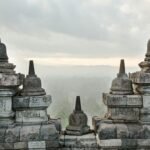
Reaching the observation deck is a moment of pure reward. As I found a spot near the wooden railings, the valley below was still draped in a thick, velvety blanket of fog. In the distance, the silhouette of Candi Borobudur emerged like a ghost ship in a sea of clouds. Behind it, the twin titans—Mount Merapi and Mount Merbabu—stood as silent guardians against the deepening blue of the sky.
This view is what photographers call the “Sea of Mist.” It is a phenomenon that occurs most frequently during the transition between the rainy and dry seasons. As the first light of dawn began to bleed into the horizon—a delicate mix of violet, orange, and gold—the landscape transformed. The stupas of Borobudur, which were once mere dark shapes, slowly caught the light, revealing their iconic bell-shaped forms amidst the greenery.
According to recent tourism statistics from the Magelang Regency, Punthuk Setumbu has seen a 30% increase in international visitors over the last two years, largely due to its reputation as the premier spot for landscape photography in Indonesia. Standing there, I understood why. It wasn’t just about the photo; it was about the profound silence that fell over the crowd as the sun finally broke over the horizon. For a few minutes, the clicking of shutters stopped, and everyone simply breathed in the magic.
Descending into Life: The Path to Bukit Rhema
As the sun rose higher and the “golden hour” transitioned into a bright, clear morning, the temperature began to climb. The descent from Punthuk Setumbu is much easier, offering a chance to appreciate the flora I had missed in the dark. Teak trees and giant ferns line the path, and the air feels incredibly pure—saturated with oxygen that feels like a tonic for the lungs.
However, the morning air and the physical exertion had stirred up a formidable appetite. Instead of heading back to the hotel, I made the short trek toward Bukit Rhema. This hill is home to one of Indonesia’s most eccentric and beautiful architectural wonders: the “Chicken Church” (Gereja Ayam). While it is technically built in the shape of a dove with a crown, its avian appearance has earned it a quirky nickname and worldwide fame after being featured in the film Ada Apa Dengan Cinta? 2.
Breakfast with a View: Kedai Bukit Rhema
Located at the back of the Bukit Rhema structure is a hidden gem: Kedai Bukit Rhema. This café offers what I believe is the best breakfast view in the Menoreh Hills. Entering the café, you are immediately greeted by the rich, earthy aroma of freshly brewed Javanese coffee—a scent that instantly boosts the mood.
I secured a table right at the edge of the balcony, overlooking the valley I had just seen from above. The fog was now just a few wisps clinging to the treetops. The menu here celebrates local simplicity, which is exactly what a morning like this requires.
The Legend of Latela Gula Tumbu
You cannot visit Kedai Bukit Rhema without trying their signature dish: Latela Gula Tumbu. This isn’t just your average fried cassava (singkong). The cassava is first boiled until it reaches a melt-in-your-mouth tenderness, then lightly fried to create a thin, crispy outer shell. It is served with a traditional “sambal” or a palm sugar dip, depending on your preference.
Why it works:
- The Texture: The contrast between the fluffy interior and the crunch of the exterior is addictive.
- The Pairing: Combined with a cup of hot black coffee (Kopi Menoreh), the savory-sweet profile of the cassava creates a perfect balance.
- Cultural Connection: Cassava has been a staple crop in the Magelang highlands for centuries, and supporting these local dishes helps sustain the regional agricultural economy.
Sitting there, watching the sunlight play across the Menoreh ridges while sipping coffee, I realized that time moves differently here. In the city, we measure time by deadlines and notifications. Here, time is measured by the movement of the sun and the clearing of the mist.
Practical Information for Your Visit
If you are planning to recreate this morning itinerary, here are some essential details to keep in mind:
- Timing: Arrive at Punthuk Setumbu by 4:30 AM to secure a good viewing spot. The sun usually rises between 5:15 AM and 5:45 AM.
- Entrance Fees: Expect to pay around IDR 20,000 – 50,000 (prices vary for domestic vs. international tourists). Keep some small change for parking.
- Location: Punthuk Setumbu and Bukit Rhema are located in Karangrejo Village, Borobudur District. They are about 15-20 minutes away from the main Borobudur Temple.
- Best Season: The dry season (June to August) offers the clearest skies, though the “Sea of Mist” is often more dramatic during the shoulder months (April-May or September-October).
Conclusion: Finding Peace in the Menoreh Hills
My morning journey from the peaks of Punthuk Setumbu to the wooden tables of Kedai Bukit Rhema offered more than just beautiful photos. it provided a much-needed perspective shift. We often think of Borobudur as a monument to be visited and checked off a list. But when you view it from a distance, framed by the raw beauty of the Menoreh Hills and the daily rhythms of village life, it becomes part of a much larger, living story.
Magelang has a unique way of healing the weary traveler. It asks you to slow down, to breathe deeply, and to appreciate the simplicity of a well-cooked piece of cassava and a warm cup of coffee. If you find yourself in Central Java, do yourself a favor: set that 4:00 AM alarm. The experience waiting for you on the hills is worth every lost hour of sleep. The hills are calling, and the sunrise is waiting to be shared.
The post Menikmati Pagi di Sekitar Borobudur: Cerita dari Sunrise Punthuk Setumbu dan Kedai Bukit Rhema appeared first on Cafe & Resto Di Borobudur.